Human After All: Supercell And “Sayonara Memories”
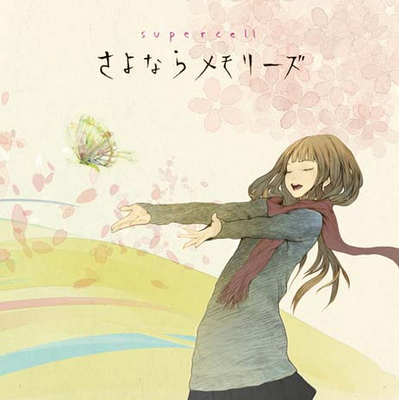
The Japan Time’s published an excellent profile of J-Pop artist Supercell a few days ago, a real must read if you have any passing interest in the genre and you want to learn about one of the more left-field success stories in the Japanese music industry. The dude behind the group Ryo, no last name disclosed, started the Supercell project by uploading songs featuring singing created by the terror-inducing Vocaloid software onto the Japanese equivalent of YouTube Nico Nico Douga. His music soon gathered a following, and Sony Music Entertainment signed Supercell to a deal. The major label gave Supercell’s independent self-titled album a bigger release, allowing the LP to climb as high up as #4 on the Oricon album charts.
Ryo’s use of Nico Nico Douga to build popular steam alone stands as a triumph in an industry where so many popular artists seem cultivated in a lab. It bears some resemblance to Arctic Monkey’s MySpace-led blitz on the British charts a few years back, except this happened in a country where Alex Turner and co. would never have a chance. Yet Supercell’s structure also jumps out as strange in the J-Pop world. Though only Ryo creates the music, the group consists of 11 members total. The majority of them work on Supercell’s artwork, designing CD covers, album booklets and music videos. Supercell, then, is a surprisingly DIY (given the setting of J-Pop, of course) collective capable of creating nearly all elements of a musical release. On top of that, nobody from Supercell has shown their face, adding a sense of mystery to all of this. This becomes an even more impressive feat when you learn Ryo ditched the Vocaloid software in favor of a real human voice from a singer only known as Nagi. Considering some pop outfits in Japan appear on snack food boxes, Supercell’s ability to stay hidden from the public eye comes off as very out of the ordinary.
Production aside, the actual music of Supercell ends up being much more in tune with popular trends. Moving to a major label might have been the project’s best possible stroke of luck, because a listen to Ryo’s breakout tune “Melt” reveals an ugly truth…the song’s not very good. The backing music sounds OK, but all of that gets drowned out by the ever-present annoying-ness of Vocaloid singing. It sounds fake in a way not even Autotune can come close to touching.
[youtube=http://www.youtube.com/watch?v=WGLMBwqO9jQ&hl=en_US&fs=1&]
The addition of Nagi’s human voice to the group changed things for the oh-so-better. The band’s first single “Kimi no Shiranai Monogatari” was an improvement, but it’s with this month’s “Sayonara Memories” the outfit’s full potential becomes clear. Ryo basically spruces up a J-Pop ballad, allowing emotional pianos and string arrangements to stand alongside a more rollicking beat. It’s a clever move, keeping all the drama of a ballad but moving it along at a far more engaging pace. “Sayonara Memories” would be a small victory with just that, but it’s on this song where the addition of human singing really seems like a good move for Supercell. Nagi’s no vocal knockout, but she has a good singing voice that does well to convey the emotions of the single. It meshes much better with the music than a Vocaloid could ever hope too, and offers a good dose of humanity intentionally missing from the band’s earlier songs.
[youtube=http://www.youtube.com/watch?v=mt0D29XOP4w&hl=en_US&fs=1&]
In the Japan Times article, Ryo says he plans on experimenting with his Vocaloid software once again in the future. Go ahead, just make sure to save a little room for an actual human voice on the debut album.